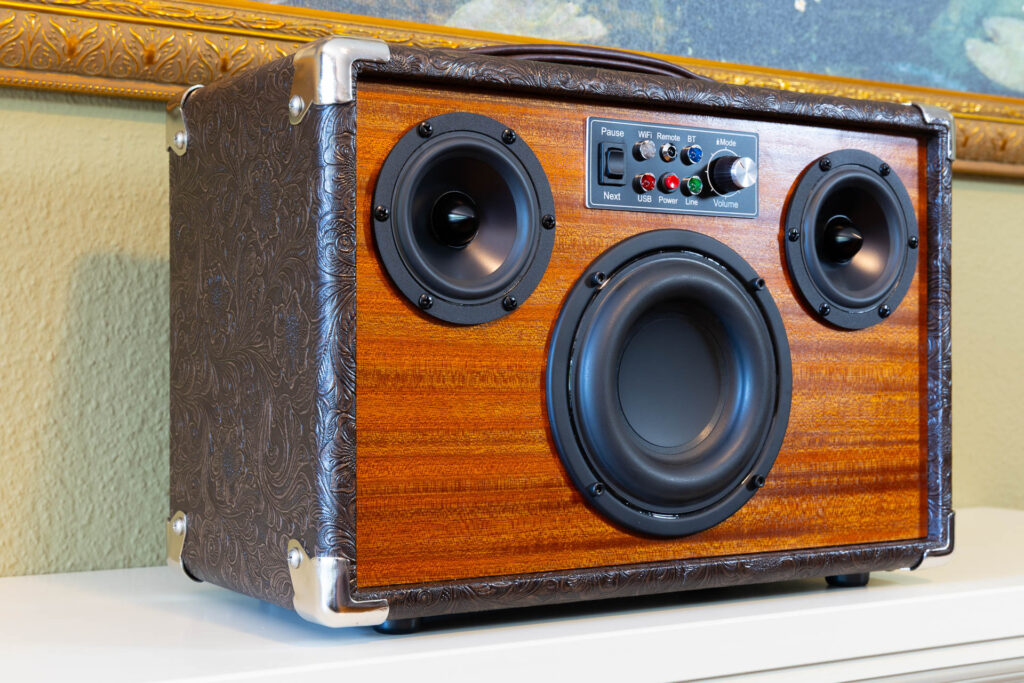
For a long time, I was looking for a modern boombox with a “vintage” twist. Sturdy enough to be used at garden parties but still stylish enough to cut a fine figure in my traditional living room. Since I couldn’t find a commercial one that ticked all the boxes I decided to build one myself. Fortunately, I’m already interested in electronics, audio, and woodworking for years and gained a bit of experience. These were my main requirements:
- The boombox shall be portable.
- It shall be battery-powered but also run on mains power if available.
- It shall have a powerful bass.
- It shall access different music sources (Spotify, Apple Music, files on local devices) via Bluetooth, WiFi, or AirPlay. Further connectivity via Line-In or USB would be great.
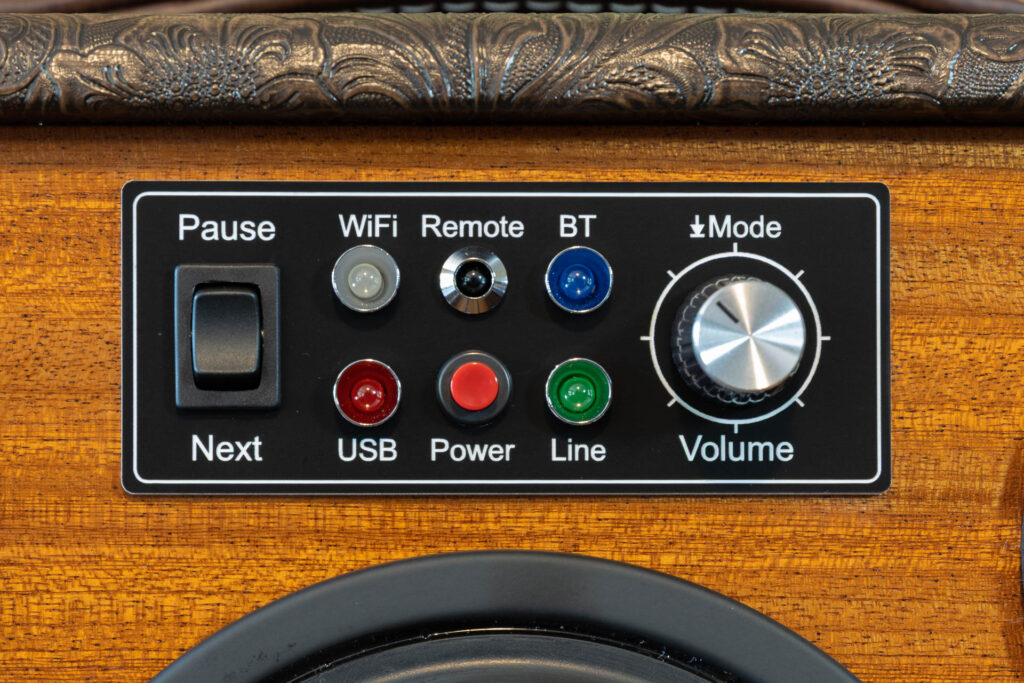
- The basic functionality shall be controllable at the boombox itself while a remote control or smartphone app should allow access to more advanced features.
- Its design shall take inspiration from vintage Marshall guitar amplifiers with their mix of wood, leather, and metal.
My project started with analyzing an existing design, the Dinas Boombox, developed by Toid. It is a 2.1 system (two fullrange speakers plus one subwoofer) in a wooden cabinet of about 10 liters with a slot port and a simple Class D amplifier. I liked it a lot but had to make several changes:
- Instead of a slot port, I wanted a closed cabinet. No need to invite creepy insects to crawl inside and raise their offspring there 😆.
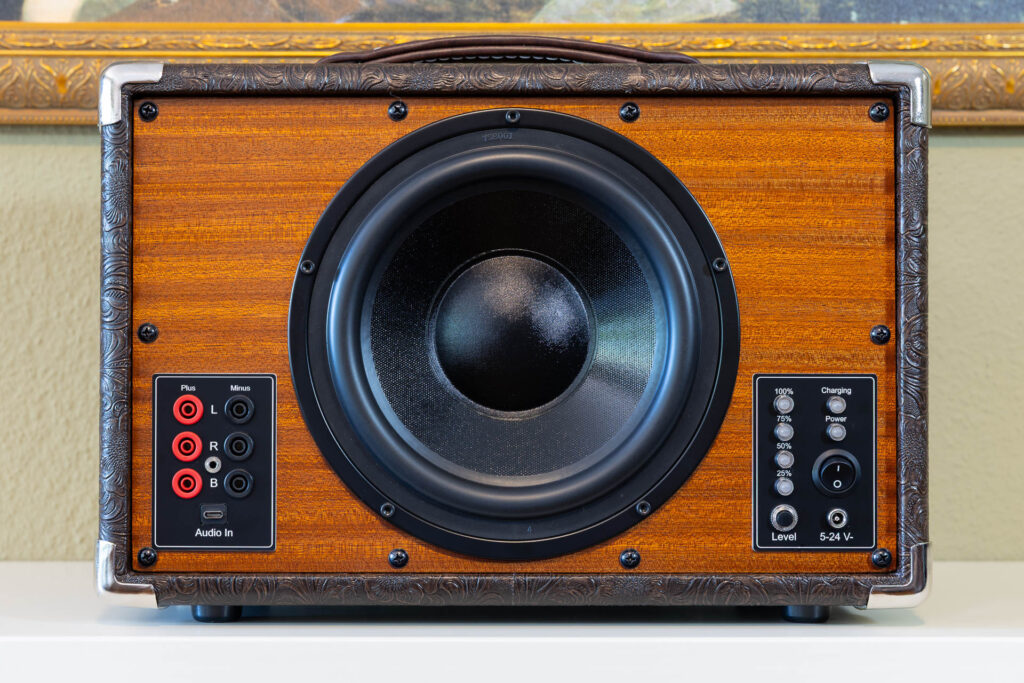
- To have a powerful bass, a closed cabinet of 10 liters is not sufficient. I added a passive radiator to solve this problem.
- Due to the size of the passive radiator, I had to change the dimensions of the cabinet. With dimensions of 40x26x20cm (WxHxD), my boombox is a bit narrower but considerably deeper than the Dinas boombox.
- For the cabinet, I used thicker plywood (15mm instead of 12mm) to make it more sturdy and improve the bass response.
- I used a much more sophisticated Class D amplifier with more connectivity and customizing options and remote/App control.
- I added some special features to cover some of my secondary use case. More on that in a later post.
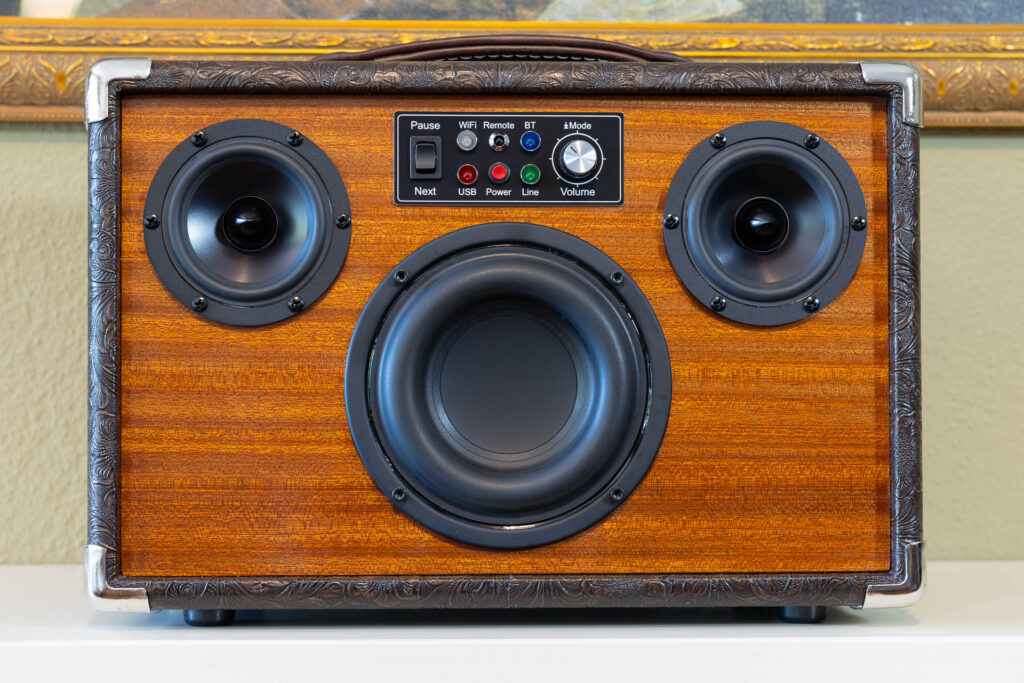
I proudly present you the finished boombox. Still portable but at 9kg not really “light”, with a good bass response down to 40Hz, 6-10hrs of runtime per charge, and a beautiful vintage look. It contains two fullrange speakers (Dayton Audio RS100-4; 4″, 4 ohms, 30 watts), a subwoofer (Tang Band W5-1138SMF; 5.25″, 4 ohms, 40 watts), and a passive radiator (Dayton Audio DS215-PR; 8″). The amplifier used is an Up2stream AMP2.1 that should produce a maximum RMS of about 2x20W+40W in this setup.
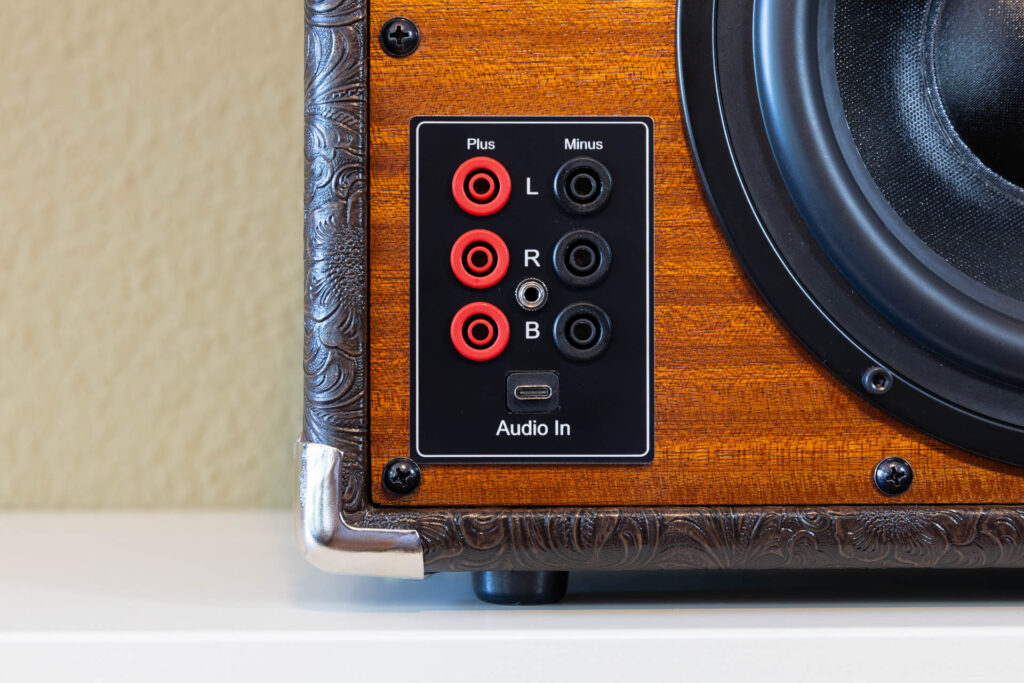
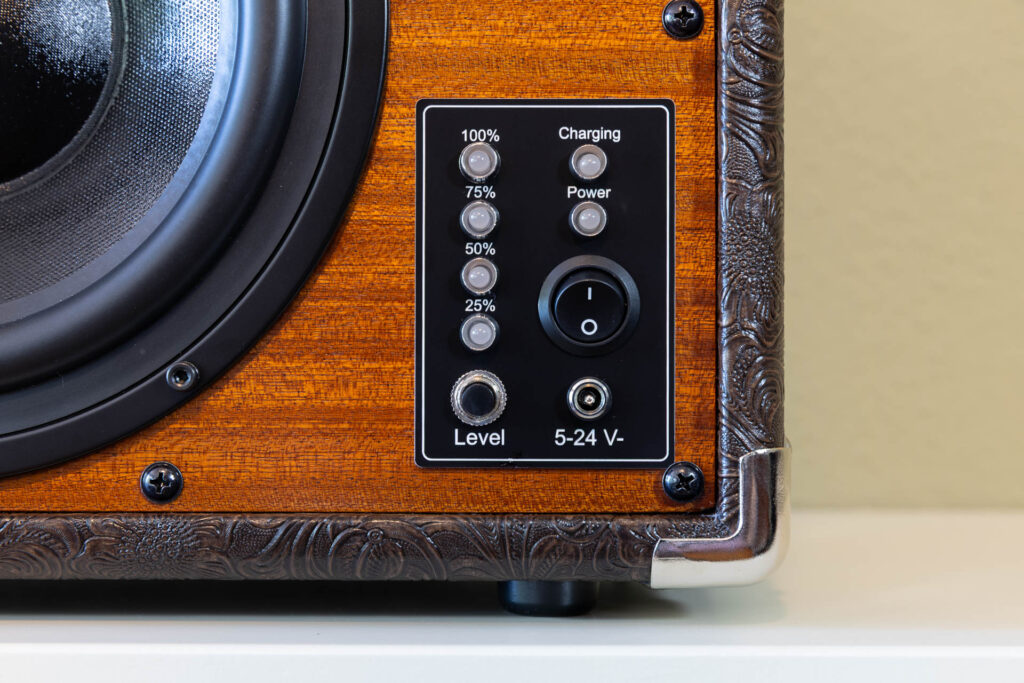
In the next posts, I will describe the essential details of the boombox.